
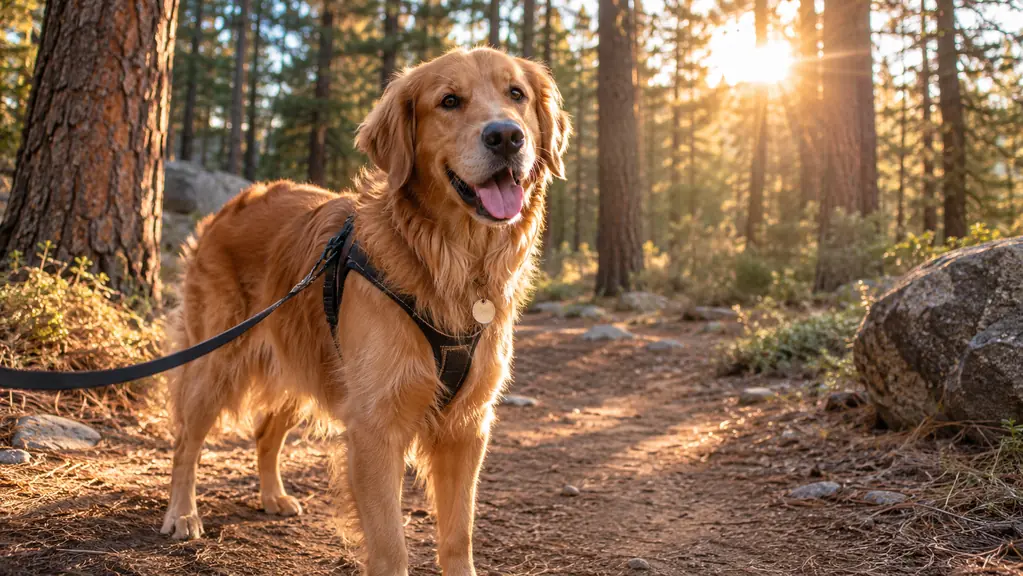
I bought the Ruffwear Front Range harness two weeks after Moss came home from the rescue. He was two then, a red merle Australian shepherd mix, and for those first two weeks he wore nothing but a flat collar. Every walk ended the same way. The leash would go taut, he would plant his feet and lean backward, and I would stand in the dust negotiating with a dog. So I drove into town, picked up a Medium Front Range, and spent ten minutes that first evening on the kitchen floor getting the straps where they needed to be.
Four years later it still hangs on the hook by my back door, and it is still what I reach for on a short hike or a snowshoe morning. That is the honest headline. What follows is the rest of it, the parts no listing photograph shows, including the care instruction that made me sigh and the one feature I use far less than you would expect.
The Quick Verdict
Well padded, genuinely adjustable, and the second leash point earns its place on the odd day your dog forgets his manners. Hand wash only and how eagerly the fabric collects burrs are real costs, not small print.
Amazon Check Today's Price →The Harness That Ended the Leaning-Backward Routine
Four years of Cascade day hikes and wet Saturdays, and nothing on it has broken. Sizes and current availability are on the Amazon listing.
Amazon Check Today's Price on Amazon →What Nobody Tells You About Fitting It
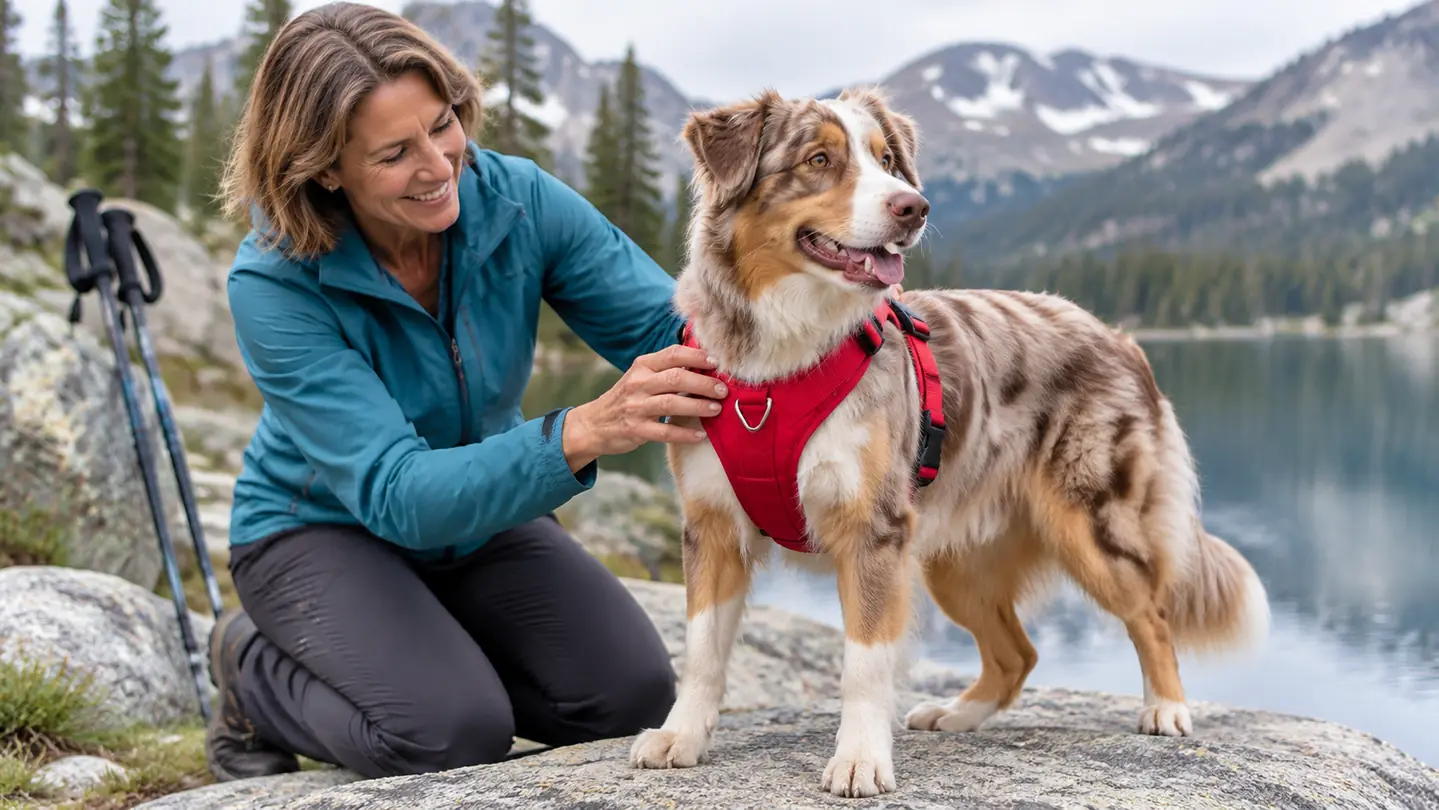
The listing calls the closure pull on, and that is accurate, but it makes the first evening sound simpler than it is. There are several straps to work with and they all pull on each other. Tighten the shoulder and the padded chest panel shifts. Loosen the chest and the whole thing slides back toward the shoulders on a descent. I spent about ten minutes on the kitchen floor with Moss standing over me looking mildly betrayed, and I have not touched the adjustment since. That is the part worth knowing. The fiddly evening is real, but it happens once.
The foam padding is what surprised me. I expected a strap harness with a little cushion stitched onto the front. What arrived is closer to a padded vest with straps running through it. On a long Saturday, when Moss is trotting ahead and the leash is slack most of the way, the padding is doing very little because nothing is pulling on it. It matters on the descents. It matters when he decides to lean into the leash. That is exactly where a flat collar was at its worst and where this harness quietly does its job without me noticing.
The sizing is worth a note too. Ruffwear builds the Front Range in a range of sizes and the straps take up the rest of the difference, so the fit is less about hitting an exact measurement and more about having enough strap to work with. Moss is a 46 pound dog with a 28 inch chest and he is in a Medium. I did not measure him before I bought it. I looked at the weight range, guessed, and got lucky. If you land between sizes, the adjustment is generous enough that either one will likely work, but spend the ten minutes either way.
Two details on the listing are easy to skim past. There is reflective trim along the sides, which I notice most in the last twenty minutes of an evening hike when the light goes flat and grey. And there is a dedicated loop for the Ruffwear Beacon Light, sold separately. I have never bought the light. I clip nothing there. If you hike in the dark that loop is probably the reason you would choose this model over another, and if you do not, it is a small piece of webbing on your dog's back that you will forget about entirely.
The Two Leash Points, and Which One I Actually Use
There are two places to clip a leash. On the back there is a V-ring, and that is where the leash lives on nearly every hike we take. It sits behind the shoulders and lets Moss move the way he wants to move. When he trots, the leash rides above his tail and I barely feel him on the other end of it. On the chest there is a second loop, lower and toward the front. The first time I clipped there, on a morning when he was very interested in something in the brush, he turned toward me instead of away. That is the whole point of it.
I use the chest loop a handful of times a season. Not because it does not work, but because most of our hikes do not need it. Moss is six and he is not a hard puller on a normal trail day. When he does lock onto something, the front clip is the difference between a dog I can steer and a dog I am hanging off of. If your dog pulls on every single walk, this is the feature you would buy the harness for, and you would use it far more than I do.
One thing the front clip changes is how the leash hangs. With the leash on the chest, it crosses in front of the dog's front legs on a loose line, and it takes some getting used to for both of you. On a narrow trail with roots and loose rock, I found myself watching the leash instead of the trail. So I keep the back V-ring as my default and treat the chest loop as a tool I pull out for a specific problem, not a mode I leave it in for the day.
Four hiking seasons, hundreds of Saturdays, and nothing on this harness has broken. Not a strap, not a seam, not the reflective trim.
The Wear and Tear Nobody Mentions Up Front
It is hand wash only. In practice that means the sink, a little soap, and a towel over the porch rail to dry. Twice a season, three times if the dust has been bad. It is not difficult, but it is a chore a machine would have handled in ten minutes, and it is the one thing that ever made me look at other harnesses. If you are the sort of person who will not hand wash a dog harness, be honest with yourself about that before you order, because grit worked into padding is not doing your dog any favors over a long day.
Second, the fabric collects burrs and dust like it was built for it. Central Oregon in late summer is cheatgrass, dust and pine needles, and after a hot dry Saturday this harness comes home looking like it went out on its own. Most of the dust brushes off with a hand. The burrs need fingers. I have started giving it a quick pass with a stiff brush on the porch before it goes back on the hook, which takes about a minute and keeps the padding from turning into a pincushion.
Third, the fabric has faded. Four years of high sun, four years of sink washing, four years of hanging by a door. The straps still look sound and the stitching is intact, but the padded panels have lost their depth. That is cosmetic and I am not pretending otherwise. I bring it up because a listing photograph shows a harness on day one, and if you want your dog to look sharp on the trail, know that this one settles into a sun bleached look after a few seasons of real use.
Rain, Mud, and Wet Mornings on the Trail
It gets wet. Nothing in the listing claims otherwise and I would not believe it if it did. Polyester straps hold water, the padding holds water, and after a wet morning the harness comes off in the mudroom and goes on the drying rack next to the leash. It dries overnight in a warm house. On a cold morning it goes back on slightly stiff and loosens up within ten minutes of walking. That is the whole story. No drama, no ruined gear, just a piece of fabric that needs to dry before tomorrow.
Mud is more interesting. The padding traps grit in a way the straps do not, and grit in a harness that sits on the chest all day is the reason I wash it as often as I do. My routine after a muddy Saturday is a rinse in the sink, a squeeze, and a night over the rail. Next morning it is dry and it does not smell like the trail. That rinse is not optional if you hike in the shoulder seasons, and it is the same rinse that makes the hand wash instruction feel less like a burden.
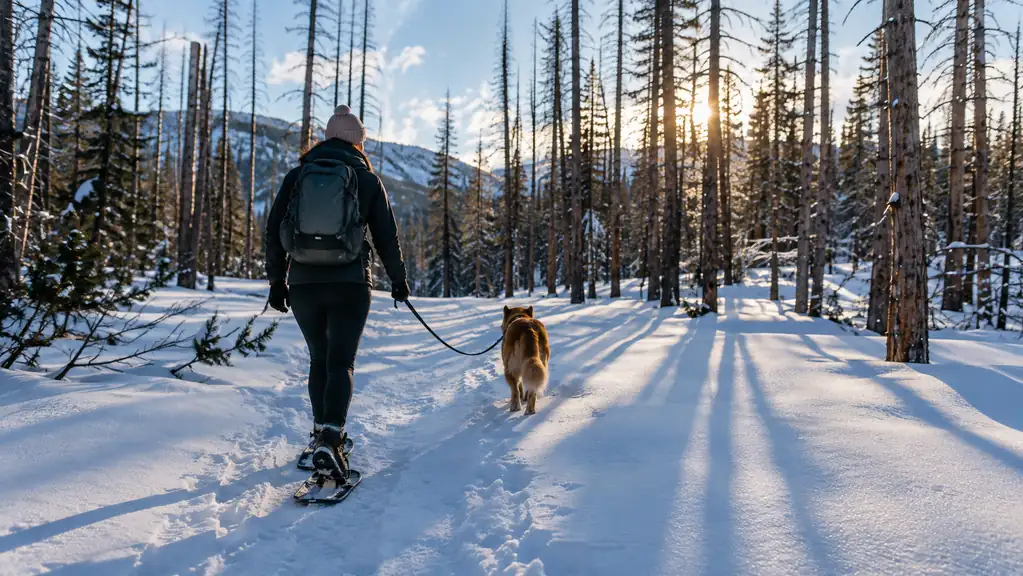
Snow is easier. On snowshoe days the harness comes home with snow packed into the padding, which melts in the mudroom and leaves a wet harness and a puddle on the tile. I shake it out and hang it. The reflective trim is the part I actually appreciate on a winter afternoon, when the light goes early and a dark dog on a white trail is harder to see than you think. That is not a claim about safety. It is a thing I notice every February and I would notice it more if it were gone.
Why the Flat Collar Stopped Working on Trails
For the first two weeks I had Moss, the leash clipped to his flat collar and nothing else. That is what most people do, and on a sidewalk it works fine. On a trail it stopped working for me. A collar sits at the throat, and when a dog leans into a leash, everything he has goes into that one narrow band. Moss would cough, I would feel awful, and neither of us was having a good time. The collar was not the problem. The place I was asking it to do its job was.
He still wears a flat collar on the trail with his ID tags on it. That has not changed and I would not hike without it. What changed is where the leash goes. The Ruffwear harness moved the pressure off his throat and onto his chest and shoulders, and the leaning backward stopped being a whole production. Tags on the collar, leash on the harness. That is the arrangement four years on, and it has not needed revisiting.
What Four Years of Saturdays Actually Looks Like
The routine has not changed. Most Saturdays from spring through fall we do four to nine miles on the Cascade trails outside Bend. In winter, when the trails above town hold snow, we snowshoe instead. Moss wears the harness for all of it. On the overnights we do each summer he wears his day pack instead, and the leash clips to the pack's own leash point, so the harness stays on the hook at home. That split has held for years without me thinking about it.
The honest part about four years is that nothing has happened. No strap has failed. No seam has opened. Nothing has been replaced. The adjustment I set on the kitchen floor in the first week is the adjustment it is on today, which says something about the straps and something about a fit that was right the first time. I am not gentle with gear. It lives on a hook by a door, it rides in the back of the Subaru, it gets rained on and forgotten until the next Saturday.
What I would tell someone who is deciding is that this harness did not change my dog. Moss still hikes the same trails at the same pace he did four years ago. The gear did not make him a better trail dog and it did not fix anything about him. What it did was remove a small daily friction, that leaning backward at the start of a walk, and it removed it quietly and kept removing it. That is a lower bar than most reviews promise. It is also the honest one.
What I Liked
- Foam padded chest panel that stays comfortable on long days, not just quick walks
- Two leash points: the back V-ring for normal hikes and a chest loop for the days your dog forgets his manners
- Adjustable enough that a fit set in ten minutes four years ago has not needed changing since
- Reflective trim along the sides and a dedicated loop for the Ruffwear Beacon Light, sold separately
- After four hiking seasons of real use, nothing has broken, torn, or needed replacing
Where It Falls Short
- Hand wash only, and the padding holds grit until you actually do it
- Collects burrs and trail dust faster than any other piece of gear I own
- The finish fades with sun and washing, so it will not look new after a few seasons
- The chest loop takes practice, and the leash crosses in front of the dog's front legs
- No handle on the back for helping a dog over a log or up a rock step
Who This Is For
This is for the person who hikes a few miles most weekends with a dog who mostly walks nicely and occasionally does not. If you want one harness that handles an ordinary trail day and gives you a steering option for the one bad moment, this does that, and it keeps doing it for years. It suits a dog who is comfortable being handled, since the closure is pull on and you will be working straps over the head and around the chest, at least the first time you put it on.
It also suits anyone tired of replacing gear every season. Four years is not a lifetime test, but it covers four full hiking seasons and a lot of wet Saturdays, and the harness has not given me a reason to shop around. I have never owned another harness, so my only comparison is the flat collar from those first two weeks. I bought this one with my own money, and I would buy it again, which is the only endorsement I know how to give honestly.
Who Should Skip It
Skip it if you will not hand wash a dog harness. That is the most common reason people end up unhappy with this one, and no amount of padding makes up for a stiff, gritty harness that never gets cleaned. Skip it too if your dog is a serious, constant puller on every single walk. The chest loop helps, but it is a steering aid on a padded everyday harness rather than a training tool, and a dog who leans into the leash for miles needs a different approach than a piece of equipment.
And skip it if you want a harness that still looks new in year three. This one fades, holds burrs, and shows its miles. Mine has character now, which I like and you may not. If appearance matters more to you than longevity, there are other harnesses that will hold their finish longer and will not come close to four seasons of Saturdays.
If you take one thing from this, take the fitting evening. Give it the ten minutes, get the straps right while your dog is standing still on a kitchen floor, and then leave them alone. Mine has been set since the first week and has not moved since. That is the review, honestly. The rest is a harness doing its job on a lot of Saturdays without anyone thinking about it.
Four Years In, Still the One on the Hook
Not the lightest harness out there. The one that fit in ten minutes, survived four seasons, and still gets used every Saturday. Current sizes and price are on the Amazon listing.
Amazon Check Today's Price on Amazon →