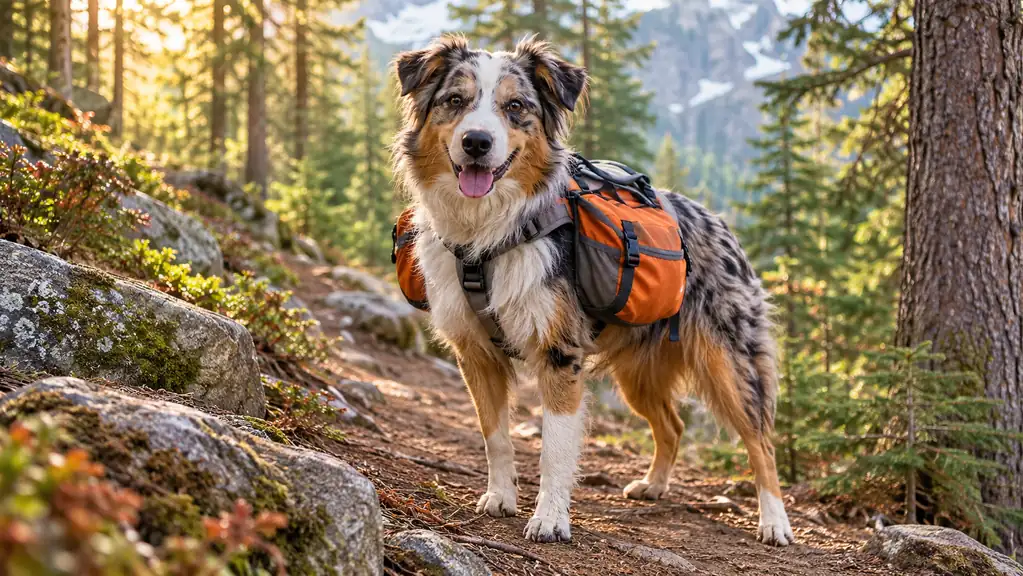
For the first two years I hiked with Moss, I carried his water. Two bottles in my own pack, on top of my own two, plus the bowl, the treats and the poop bags. On a nine mile day in the Cascades that is a lot of weight to carry for a dog who is perfectly able to carry some of it himself. So two years ago I bought the Ruffwear Front Range Day Pack in a Medium and started handing part of the load to the one who actually drinks it.
This is not a first impressions write up. The pack has been on Moss for two full hiking seasons now, most Saturdays from spring through fall, plus a handful of one and two night trips each summer. What follows is what held up under that, what I still fumble with in the parking lot, and the days I leave it on the hook by the back door and reach for the harness instead. Nothing here was a gift and nobody sent me anything to test. I bought it with my own money, I use it, and my dog wears it.
The Quick Verdict
A light, steady day pack that gets the water off your back and onto your dog. Two seasons in, nothing has failed. The fussiest part is evening out the two sides before you leave the house.
Amazon Check Today's Price →The day I stopped carrying my dog's water
The Medium Front Range Day Pack weighs 15.84 ounces empty and has room for two bottles, poop bags and treats. If your dog is already doing five miles, he can do five miles with a job.
Amazon Check Today's Price on Amazon →How I've Used It
Moss is a 6 year old Australian shepherd mix, 46 pounds, about 21 inches at the shoulder and 28 inches around the chest. He is a Medium in this pack. The fit was right in the first week and I have not adjusted a strap since, which says as much about the shape of the pack as it does about him.
On pack days he wears the pack instead of his harness. The leash clips to the pack's own leash point, so I am not layering a harness under a saddlebag and I am not threading anything twice at the trailhead. Pack days are hikes over about five miles and any overnight. On the shorter Saturday loops and on the snowshoe days in winter, the Ruffwear Front Range Harness goes on and the pack stays home. That split has held for two years without me rethinking it.
The first two outings he walked a little stiffly, the way a dog walks when he is not sure whether the thing on his back is allowed to move. By the third hike he ignored it. He has not thought about it since, and he now stands still at the car while I set the bottles in, which I take as a good sign.
What the Saddlebags Actually Hold
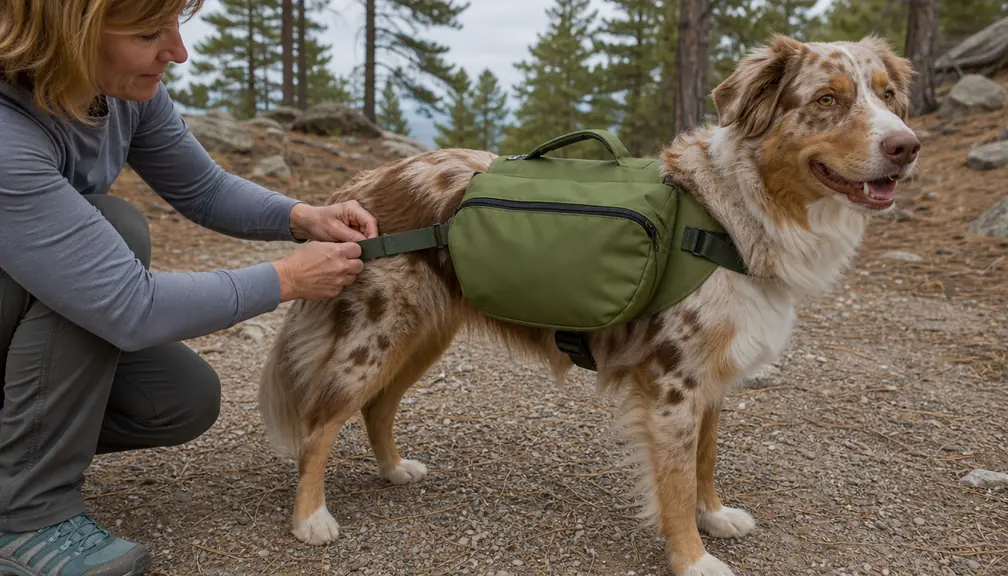
My load for him is deliberately small. Two 20 ounce plastic bottles from home, one in each side, a roll of poop bags in a zippered pocket, and a handful of treats. That is the whole list. You can load this pack heavier than I do and I have passed hikers who have, but I have no interest in turning a 46 pound dog into a pack mule. He carries his own water and nothing else.
The saddlebag design is what makes that small load sit still. The weight sits forward over his shoulders instead of hanging off his ribs, and the passive compression in the design keeps the two sides from swinging when he trots. On a downhill he moves like the pack is not there. On the flat he moves like the pack is not there. That is the highest compliment I can give a piece of gear, because a dog who is uncomfortable tells you immediately and in every photograph.
The thing I still carry myself is the first aid kit, my own water, and the extra layer. The pack holds the dog's water and nothing that would matter much if it fell in a creek. That division of labor is worth thinking about before you buy. This is not a pack that lets you off the hook entirely, it just takes the heaviest and most repetitive item off it.
One thing nobody warns you about: it takes about a minute to get the two sides even. I fill both bottles at the kitchen sink, cap them, and set one in each saddlebag before the pack goes on him. If I get lazy and put both bottles on one side, the whole thing lists and I can see it in his gait inside a hundred yards. Even it out at home and it disappears on the trail.
Fit, Balance and the Three Leash Points
The radial cut means the pack is shaped to sit behind the shoulders rather than across them, so his front legs swing without anything pulling. Over two seasons I have not found a rubbed spot, and I check under the straps after every long day, the same way I check his paws. The Ruffwear sizing put Moss in a Medium on the first try and it has stayed a Medium.
There are three leash attachment points on this pack. I use one. I have never had a reason to use the others and I honestly could not tell you why a day pack needs three, but they are there and they have not gotten in the way of anything. If you are coming off a harness with a single ring on the back, the extra points are a non-event.
Fitting takes a couple of tries the first week and then it is done. I loosened, walked him around the driveway, tightened, walked again, and by the third evening he was set. The straps have not slipped since. I also like that the pack sits high enough that he can still lie down in the shade at lunch without rolling onto a bottle.
Two Seasons On: What Has Held Up
The short answer is everything. The zippers still close cleanly, the seams have not opened, and there is no fraying at the edges of the saddlebags after two seasons. It gets hand washed when it starts to smell like a wet dog, which is once or twice a season, and it dries overnight on the porch rail. It has been rained on, set down on granite at lunch, and dragged through more brush than I would like.
I have washed it by hand twice a season and it still looks like a pack that has been used, which is what I want. The fabric has softened. There is dust worked into the seams that is not coming out. Nothing has torn, nothing has needed a repair, and I have not had to replace a single part.
The pack itself weighs 15.84 ounces, which is just under a pound before you add a single bottle. That number sounds like a lot until you subtract what it takes off your own back. Two bottles is forty ounces. Forty ounces is not nothing on a climb, and it is not on my shoulders anymore.
The one place it shows its limits is heat. That extra layer of fabric across a dog's back is warm, and on the hottest Saturdays of August I leave the pack home and carry the water myself. It does not breathe the way a bare harness does and I will not pretend otherwise. I have also never used it on a snowshoe day. Snow packs into the saddlebags, the bottles freeze, and Moss is working hard enough in the cold without a load on him. Winter is harness territory.
What Changed on the Trail
I want to be careful here, because this pack did not turn Moss into a different animal. He hikes the same trails at the same pace he did two years ago. What changed is me. I finish a nine mile day with shoulders that are not screaming, I stop less often on the climbs, and I am in a better mood at the car. That is the entire transformation, and it was worth it.
The other change is smaller and I did not expect it. When Moss carries his own water, I stop rationing it. I used to hold back on a warm climb so I would not run out before the truck, and now I pour the whole bowl at every stop and top him up. He drinks more than he used to. That is probably the most useful thing this pack does.
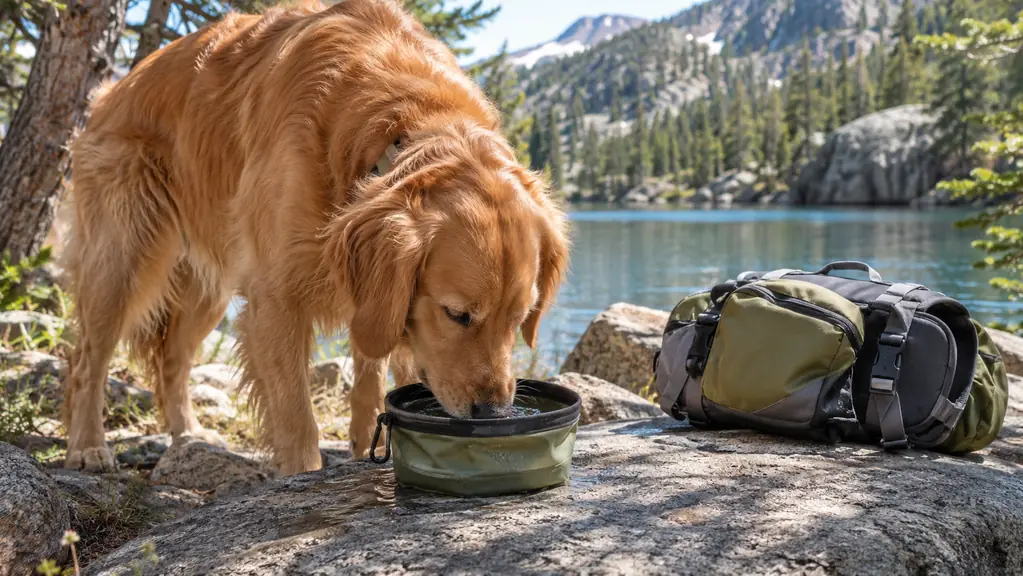
On the one and two night trips it earns its keep differently. Moss carries his own water on the hike in, and at camp I unclip the collapsible bowl and he eats his kibble out of it while I set up the tent. He is tired and he is not carrying anything heavy, and I am not making two trips from the car. That is the whole system and it has not needed improving.
For his first two years I carried everything, and I do wish I had bought this sooner. Not because anything went wrong, but because I spent two seasons doing work the dog could have done. If you are on the fence and your dog is already doing long days, that fence has a cost.
The Parts I Don't Love
Hand wash only. I have a washing machine and it does not get to touch this pack. It is not a hard job, but it is a job you have to remember before the next hike rather than the morning of, and I have forgotten twice.
The balance minute is real and it happens every single time. Even the load at the sink, not at the trailhead, or you will be squatting in the parking lot swapping bottles while your dog stares at you with the patience of a saint.
Compared with the harness, which is a thirty second job by the back door, the pack is a small production. Bottles, both sides, even them out, straps, leash clipped to the pack. Maybe two minutes. On a morning where I am already running late to the trailhead, that two minutes is the reason the harness wins sometimes.
And the warmth, again. For a dog with a full coat who runs hot anyway, this is a cool weather and shoulder season pack. June through August it spends most of its life on the hook. That is not a defect exactly, it is just the trade you make for a padded saddlebag that does not rub.
What I Liked
- Gets forty ounces of water off your back and onto your dog
- Saddlebag weight sits forward, with no swinging on the trot
- Three leash attachment points, and the leash clips straight to the pack so there is no Ruffwear harness underneath
- No rubbed spots after two seasons of Saturday hikes
- Zippers, seams and edges all still intact, hand washed twice a season
Where It Falls Short
- Hand wash only
- You have to even the two sides or the pack lists
- Warm on hot days, so it stays home in August
- Not something I would use on snowshoe days
By mile six of the first pack day I could feel the difference in my shoulders. Moss was carrying forty ounces and I was carrying none of it.
Who This Is For
This is for the dog owner who is already hiking five miles or more and is tired of being the only one carrying water. It suits a dog in the 40 to 70 pound range who is used to wearing a harness, who has a decent coat, and who does not mind a little structure on his back. If you already own a Ruffwear harness and it fits your dog well, you will recognize the way this pack sits, because the sizing logic is the same. It suits hikers who want a simple load, water and bags and treats, not people planning to strap a sleeping bag to their dog. And it suits the owner who likes clipping the leash to one thing at the trailhead instead of two.
Who Should Skip It
Skip it if your hikes are three miles around a park, because you will not notice the weight either way and the pack will just be something else to wash. Skip it if your dog runs hot, has a heavy coat and hikes in real summer heat, since a padded saddlebag is warm and there is no way around that. Skip it if you want your dog to carry a real load, because I would not go much past a couple of bottles on a dog this size without talking to someone who knows more than I do. And skip it if your dog has never worn a harness, because you should solve that first.
Two seasons, two bottles, and one less thing on my shoulders
The Front Range Day Pack is the piece of gear that changed my Saturday hikes the most, and it is the one I wish I had bought in year one instead of year three. If your dog is already out there with you, this is the handoff.
Amazon Check Today's Price on Amazon →