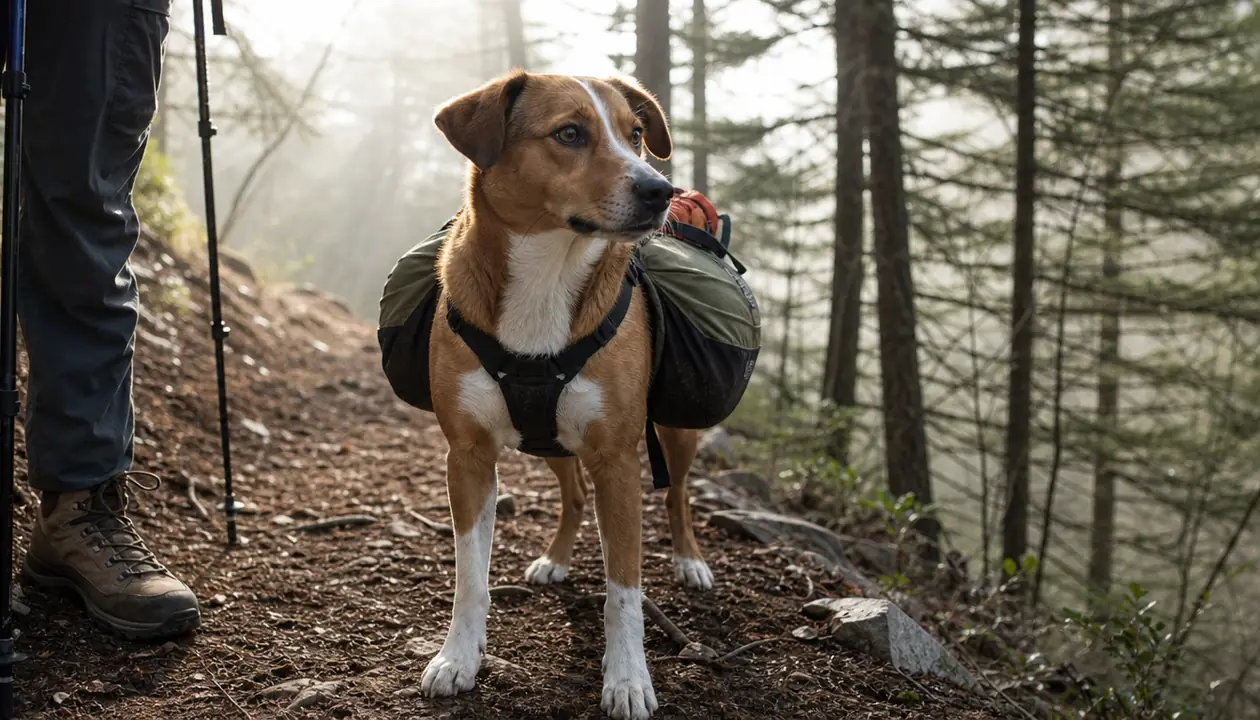
Moss is six. He is a forty-six pound Australian shepherd mix, and he has hiked the Cascade trails outside Bend with me most Saturdays for four years. For the first two of those years, I carried everything he needed in my own pack. His water, his bowl, his treats, the bags. All of it riding on my shoulders next to my own gear. Two years ago I bought the Ruffwear Front Range Day Pack and handed a piece of that load back to him.
Not all of it. He is not a pack mule and I have never pretended otherwise. But a real piece, and on a long day it is the piece that matters. Here are ten reasons it has stayed on the hook by the back door.
Your dog can carry his own water on the next long one
The Ruffwear Front Range Day Pack puts a light load on two balanced sides, clips the leash straight to the pack itself, and weighs 15.84 ounces empty. Medium suits my forty-six pound dog.
Amazon Check Today's Price on Amazon →He carries his own water past the five-mile mark
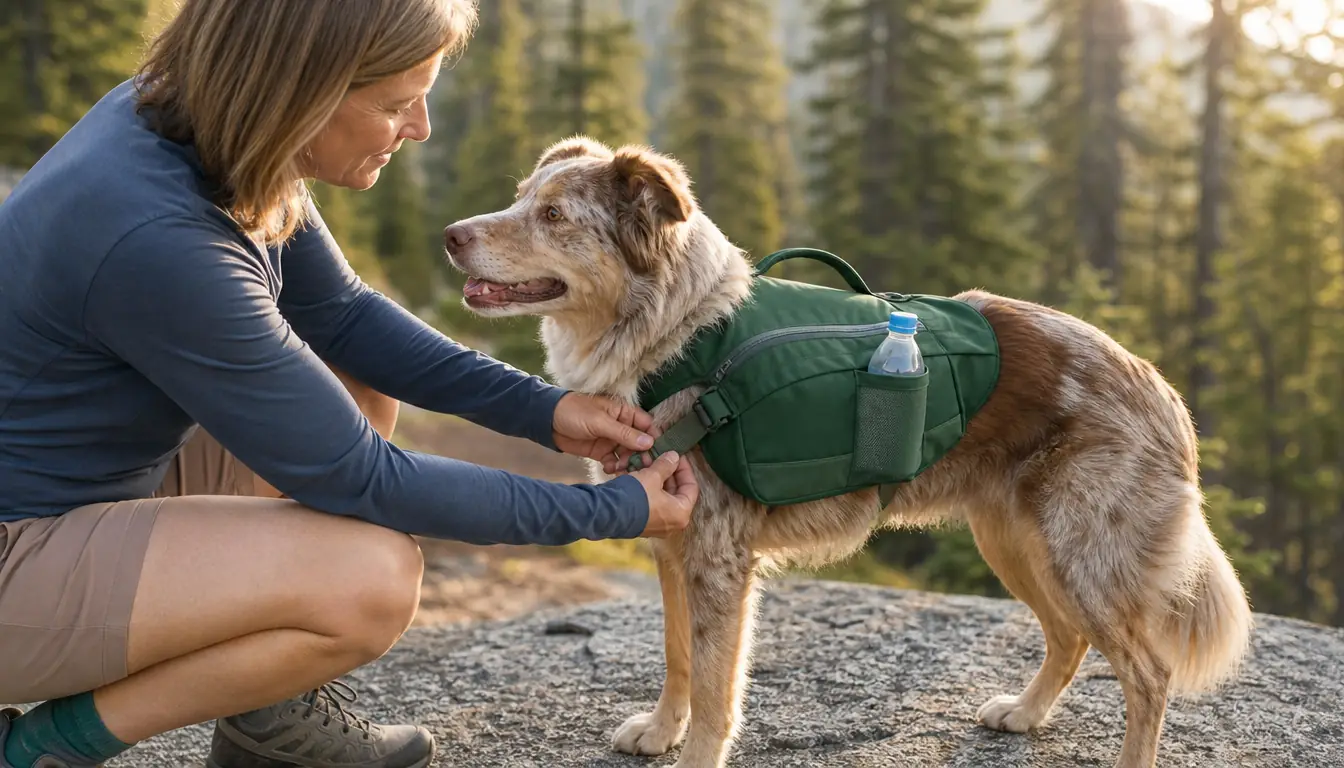
On a four-mile loop I can carry a bottle for Moss in my own pack and never notice the weight. Past five miles in summer, the math stops working. Two 20 oz bottles from home, one in each side pocket, and he is carrying the thing that is actually for him. I still bring a spare for both of us. He carries his share, and I feel the difference in my shoulders by the last mile.
It rides like a saddlebag, not a backpack
The listing calls it a weight-forward saddlebag design with passive compression. That is the part that matters on a dog. The load sits over the shoulders and along the sides instead of hanging off the spine. Nothing shifts when Moss trots. I balance the two sides before we leave, which takes about a minute, and then I stop thinking about it. A minute of fussing at the car saves an hour of a load that leans.
Three leash attachment points mean the harness stays home
On a pack day, the pack is the harness. The leash clips to a point on the pack itself, so I am not layering gear over gear on a warm climb. There are three attachment points to choose from, and I pick the one that keeps the leash clear of his front legs on a steep downhill.
The zippered pockets keep the small stuff findable
Poop bags, a few treats, the car key on days I remember to move it out of my pocket. Zippered closures mean nothing bails out when he shakes himself at the trailhead. I have opened a side pocket one handed while holding a leash and a trekking pole, which is the only test that counts.
A light load is the entire point
The pack weighs 15.84 ounces empty. What goes in it is deliberately small: two 20 oz bottles, bags, treats. Moss is forty-six pounds and I am not going to turn a Saturday into a work detail for him. Passive compression keeps a light load from sloshing, and a light load is why he trots at mile six instead of plodding. That is the whole design argument, and it holds up.
It gives me both hands back
I hike with one pair of trekking poles and a hands-free leash buckled around my waist. When my own pack carried everything, every water stop meant stopping, shrugging out of the straps, digging, and starting over. Now the bottles are on his sides where I can reach them without taking my pack off. There is a rhythm to a day like that. Walk, stop, water, walk again, and every stop that takes ninety seconds instead of four minutes is a stop I do not resent. Nine miles of that and the day ends with light still in it. It is the reason a long day feels shorter than it used to.
The fit on a medium-sized dog took one evening
Moss is about 21 inches at the shoulder and wears a Medium. Adjusting the straps the first evening took about ten minutes and I have not touched them since. I checked the fit the way I check my own pack, hands flat under each side panel, then a short walk down the driveway and back. Nothing rubbed. He walked a little stiffly on the first two short outings, the way any dog does in new gear, and by the third Saturday he acted like it had always been there. Plan two throwaway walks before you plan a long one.
It makes the one or two night trips work
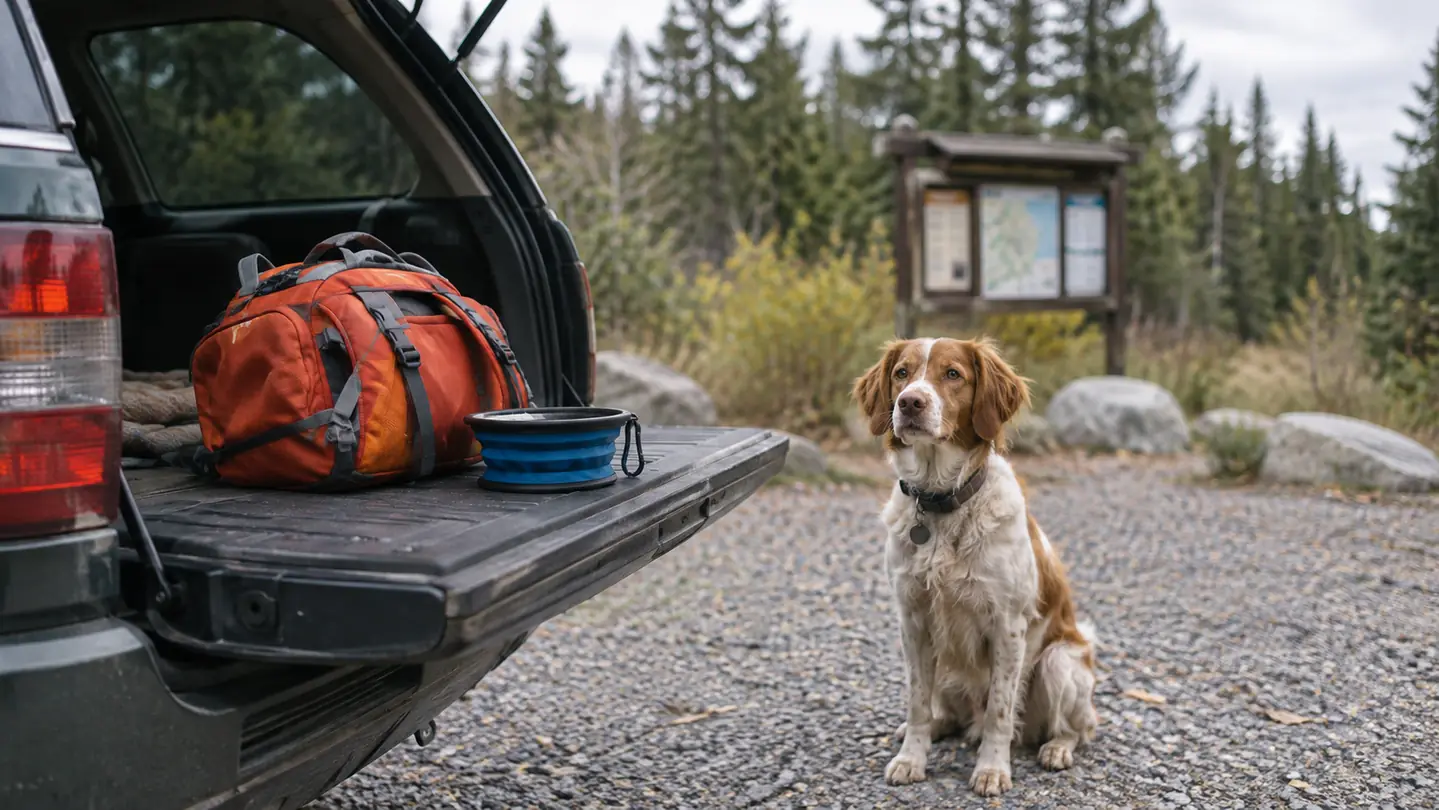
I do a handful of short backpacking trips each summer, one or two nights and no more. Moss's kibble goes into a collapsible bowl at camp. During the day, part of his water rides on him instead of on me. On paper that is a small shift. At mile seven with a full pack on my own back, it is not.
Two years of Saturdays and nothing has broken
This pack has been on dusty Cascade trails all summer, in rain, and through more than one brushy shortcut I would not repeat. It picks up grit and needs a hand wash, which is what Ruffwear asks for. I have rinsed it in the kitchen sink more times than I can count and let it dry over the back of a chair, and the trail dust comes out of the fabric. Hand wash only is a real instruction there, so it never goes in the machine. No seam has gone. No zipper has failed. No attachment point has worn through. It looks like gear that gets used, because it does, and I have never once had to stop on a trail to fix it.
It is the same brand as the harness that has lasted four years
The harness came first, four years ago, two weeks after Moss came home. The pack came two years later. Same Ruffwear build, same hand wash only instruction, same refusal to fall apart. That alone is not a reason to buy a pack. It is a reason I stopped shopping around for one. If this pack ever died, I would replace it with the same thing.
What I'd Skip
Two things I would tell you before you buy one. The pack runs warm. On a hot afternoon in August, Moss pants harder with it on than without, so on those days it stays on the hook and his water goes in my own pack instead. That is not a knock on the pack. It is my own rule for a warm day, and the pack is what gets benched, not the hike. It has never been on a snowshoe day either. Winter here means the harness, a hands-free leash and boots for icy stretches. The pack sits those out, and I do not miss it.
The other thing is the load. It is easy to keep adding, and a dog is not a luggage cart. Two bottles, bags, treats, done. And give your dog two or three short outings to get used to it before you plan a long one. Moss walked stiffly for two, then stopped noticing it entirely.
Two years of Saturdays. No seam gone, no zipper failed, and he still trots at mile six with his own water on his sides.
The pack that stopped me carrying Moss's water
Two years on my own gear hook. Hand wash only, three leash attachment points, 15.84 ounces empty, and a load small enough that a forty-six pound dog forgets it is there.
Amazon Check Today's Price on Amazon →