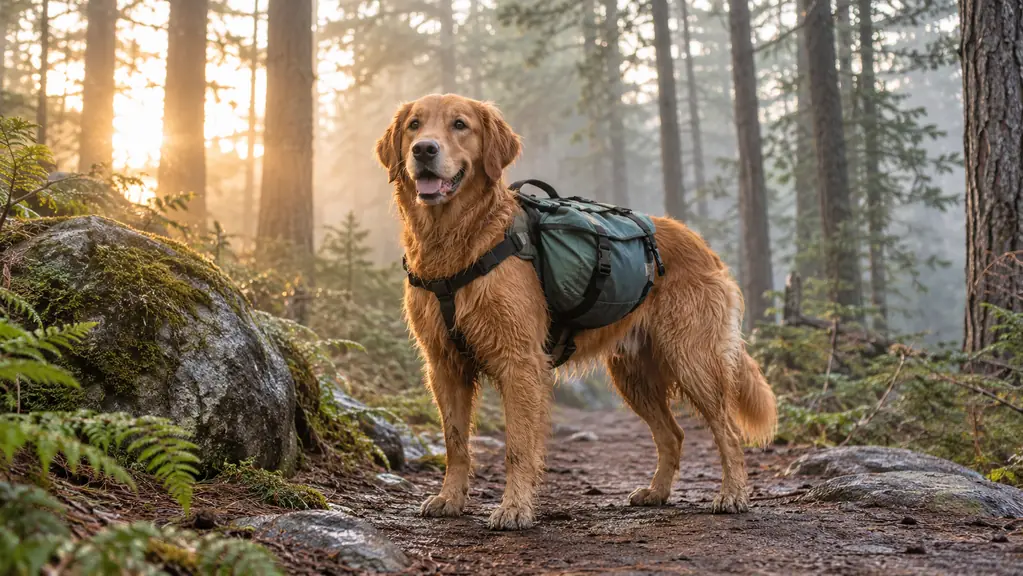
Two years ago I was the one carrying everything. Moss's water, my water, the bowl, the treats, the bags, all of it in my own pack, and somewhere around mile six of a Cascade trail I would start doing quiet math about how much further I could go before my shoulders called it. I bought the Ruffwear Front Range Day Pack for a boring reason. I wanted my own load to be lighter. What I did not expect was how much the small fussy details would matter, and how little anyone mentions them before you buy. So this is not a review that tells you a pack changed our lives. It is what two years of Saturdays in central Oregon taught me about the thing, the good parts and the annoying parts both, written the way I would say it to someone at the trailhead.
Here is the shape of our hiking, because it decides whether any of this applies to you. Moss is a six year old Australian shepherd mix, 46 pounds, about 21 inches at the shoulder, 28 inch chest girth, and he wears a size Medium. We do day hikes of 4 to 9 miles most Saturdays from spring through fall, snowshoe outings in winter, and a couple of one or two night backpacking trips each summer. I am not a guide and I am not fast. I am a 49 year old dental office manager from Bend who likes being outside on a Saturday considerably more than being inside on a Saturday, and my dog is the only company I bring.
The Quick Verdict
A well made pack that lets a medium dog carry his own water on long days. It is fussy to balance, warm on hot afternoons, and slower to put on than a harness. I would buy it again without hesitating.
Amazon Check Today's Price →He Carries His Own Water Now. My Shoulders Noticed by Mile Six.
Two 20 ounce bottles, one on each side, plus bags and treats. That is the whole load, and it comes off my back and onto his. Sized Medium on a 46 pound dog with a 28 inch chest.
Amazon Check Today's Price on Amazon →How I Have Actually Used It
I bought the Ruffwear pack two years ago, and it was the first dog pack either of us had owned. For Moss's first two years of hiking I carried his water and his gear in my own pack, which is the entire reason I finally bought one. Knowing what I know now, I would have bought it in the first month instead of waiting two years, and that is the closest thing to a complaint I have about the decision itself. My mistake, not the pack's. There is no dramatic story here about a day everything went wrong. It was just Saturday after Saturday of me being the pack horse and eventually getting tired of it.
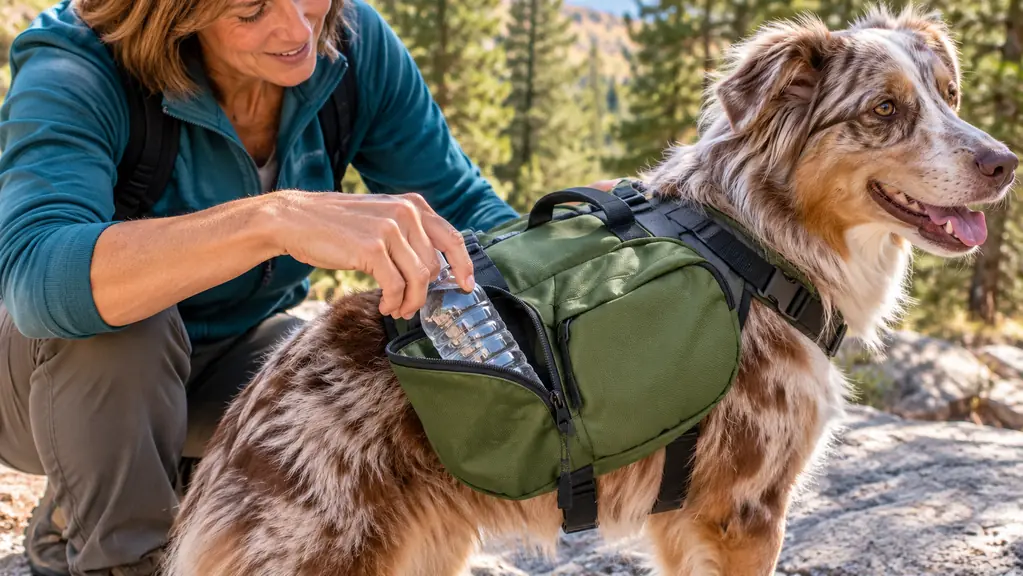
The load we run is deliberately light. Two 20 ounce plastic water bottles from the kitchen, one in each side pocket, plus a roll of bags and a handful of treats. That is it. His kibble for an overnight goes in my pack along with the stove and the layers, and I have never loaded him heavier than those two bottles. If you are picturing a dog carrying a tent, that is a different piece of gear and a different conversation. This is a day pack, and the listing says so plainly under recommended uses, which are hiking and camping. I have used it for exactly those two things.
Fit is the part that decides whether any of this works. Moss measures 28 inches around the chest and he takes a Medium. The first evening I set the pack on him on the living room floor, checked that it sat level across his back, and evened up both sides before I closed anything. Ten minutes, maybe, and most of that was me second guessing myself. It has not needed changing since, which says as much about him as about the pack. If you are between sizes, measure the chest and the length of his back rather than guessing from weight. A pack that rides crooked will rub, and a dog tells you about it by slowing down rather than by complaining.
Our first two outings were short and empty, three miles on soft dirt with nothing in the compartments. He walked a little stiffly the first time, less the second, and by the third he had stopped noticing it. Then I started adding water, one bottle at a time. On pack days he wears the pack instead of his harness, and the leash clips to the pack's own leash point. The listing lists three leash attachment points and I use exactly one of them, which suits me fine. The other two exist for people with different habits than mine, and I would rather have them and not need them.
The other thing worth saying up front is when we do not use it. Snowshoe days it stays in the car. Pack plus snow plus a long bungee leash is more fuss than it is worth, and he wears his harness on those outings instead. Hot afternoons in July and August, it also stays home more often than not. That is not exactly a defect, and I will get to the reasons below, but it means the pack earns its place on maybe two thirds of our hikes rather than all of them. I would rather tell you that honestly than pretend it comes out every single weekend.
The Parts That Earn Their Keep
The listing calls the design a weight forward saddlebag, and after two years I can tell you what that means in practice. The load sits over his shoulders rather than swinging out at his ribs, so when he trots the pack moves with him instead of against him. The radial cut is the part I could not picture from a product photo. On a real dog it means the pack sits forward with the weight carried high instead of hanging back near the hips, and on a downhill that is the whole ballgame. Moss trots down switchbacks with it on and does not have to brace against anything.
Passive compression is the listing's phrase for the way the bags pull a load in tight, and it is the reason a light load does not slosh. Two bottles ride level and stay level. I have watched dogs on the trail with packs that swayed at every stride, and the difference is obvious from ten feet away. Fifteen point eight four ounces empty, per the listing, which is light enough that I do not think about it on a five mile day and heavy enough that I would not put it on a dog much smaller than Moss. The listed dimensions run 13.78 inches long, 23.62 inches wide and 3.94 inches high, which is roughly the footprint of a medium dog's back and no more.
The zippered closure has never let me down. Two years of Saturdays and nothing has worked its way out of a compartment, and nothing has had to be fished out of the dirt. The bag roll lives on one side, the treats on the other, and I can open and close either with cold fingers, which matters more than it sounds like it should in late October. If you have ever chased a training treat down a hillside, you know exactly what I am paying for here. I have also never had a zipper pull snag on a branch or come loose on its own.
One small thing I did not expect to care about: the listing notes it is compatible with a car, and I laughed at that line until I realized I use it exactly that way. On the drive out, the pack rides in the back seat of the Subaru with the rest of the gear, and at the trailhead I put it on him and load the bottles. Coming home, it goes back in the seat and the wet things go in the cargo area. It has not marked the seat or left a stain, which I cannot say for everything that rides back there with him.
Moss still hikes the same trails at the same pace. The only thing that changed is whose back the water rides on.
The Fussy Bits Nobody Warns You About
Nobody tells you that you will spend a minute at the trailhead balancing. Two bottles, one on each side, and if one side is heavier the pack rotates slightly and rides crooked for the entire hike. The fix is easy, which is to fill both sides evenly, but it is a habit you have to build and nobody hands it to you in the box. I learned it the day I poured one bottle into the other to save a little weight and spent four miles watching the pack slide a half inch to the left. That was my error and I have not repeated it.
It is warm. A pack on a double coated dog in July is a layer, no matter how you slice it, and Moss runs hot. On the hot days I leave it in the car and carry the water myself, which makes this a cool weather and shoulder season tool for us rather than a year round one. If you hike in real heat, be honest with yourself about that before you buy, because no amount of good design fixes a dog wearing an extra layer in the sun. I would rather carry a bottle than watch him flag on a hot climb.
Getting it on takes two hands and a dog who is willing to stand still for thirty seconds. Moss is fine with it because he has been handled since he was two, but I have met dogs who were not, and a saddlebag pack is not the thing to teach that lesson on. Start with the empty pack, in the driveway, with treats, and be willing to call it a day after five minutes if it is not landing. That advice cost me nothing and it is the advice I would give a friend who asked.
Cleaning is the other chore. I have never put it in the machine. I rinse it in a bucket in the yard, hang it on the fence to dry, and put it back on the hook by the back door next to the harness and the leash. It picks up trail dust and after a while it smells like a wet dog, because it has been on a wet dog. That is not a fault of the design, but it is part of owning one, and nobody mentions it in the product photos. Expect to rinse it a few times a season and you will not be surprised by anything.
What Two Years of Saturdays Did to It
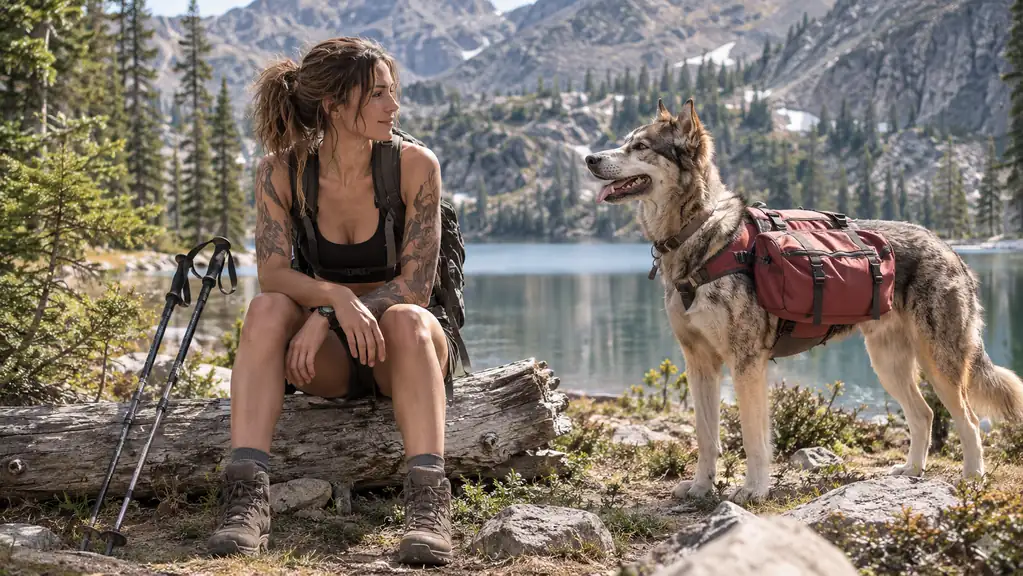
Here is the honest durability report. The zippers still run. The seams have not opened. Nothing has frayed through and the closures have not cracked. The only thing that has changed is that it looks used, which is what a piece of gear on a real dog should look like after two years. I am not gentle with any of it. The pack has been set down on granite, tossed on the back seat of the Subaru, and hosed off more times than I can count, and it has held up to all of that without a single failure I could point to. Nothing has broken and nothing has been replaced.
The one thing I would change is not a defect, exactly. With almost nothing in it, the pack still sits at its own size, because passive compression has nothing to pull in when the compartments are empty. On a short hike where I am carrying one bottle and a bag of treats, it still reads as a saddlebag on his back. That is fine. It is just a reminder that this is a pack with a job, not a piece of everyday wear, and I treat it that way.
The other honest note is that the fit has not needed touching in two years, which surprised me more than the durability did. I expected to be adjusting things every few months as he moved and as the seasons changed his coat. It has stayed where I set it that first evening on the living room floor, and I check it at the trailhead out of habit rather than because it has moved. Two years in, that is the part I trust most about the Ruffwear pack.
What I Liked
- The load rides level and stays level once both sides are filled evenly
- Three leash attachment points, so the leash clips to the pack on pack days
- Two years of weekend use with no zipper, seam or closure failure
- Light enough at 15.84 ounces that a 46 pound dog stops noticing it by the third outing
Where It Falls Short
- You have to balance both sides yourself or it rotates and rides crooked
- Warm on a hot day, so it sits out the July and August hikes
- Slower to put on than a harness and it needs a dog who will stand still
- Hand rinse and hang dry, and it will smell like a wet dog
Who This Is For
This pack suits a medium to large dog who already walks well on a leash, on day hikes long enough that carrying water for two becomes annoying. For us that is about the five mile mark, which is roughly where I used to start negotiating with myself about turning around. It suits overnights of a night or two where the dog carries his own water and nothing heavier. And it suits an owner who will spend ten minutes on fit and one minute at the trailhead on balance, because those two minutes are the difference between a pack that disappears and a pack that gets left in the car.
It also suits people who like gear that does one job well. Moss is 46 pounds and takes a Medium, and the pack looks proportionate on him rather than like luggage strapped to a dog. This is not a pack you load with a sleeping bag or a bear canister. It moves water and a few small things off your back, and it does that one thing without drama, which after two years is most of what I want from anything I carry into the woods. If you want a pack that does more than that, this is the wrong product and I would rather say so now.
Who Should Skip It
Skip it if your dog is small. A twelve pound dog carrying two bottles is not a fair trade, and there is no version of this that makes it one. Skip it if your dog will not tolerate something across his back, because a pack is not a training tool and buying one will not solve that. Skip it if you hike in real heat, since this is a layer by definition. And skip it if you want one pack to do everything, because this is a day pack and the listing is honest about that from the first line.
One more. Skip it if you are not willing to balance the load. I have watched a dog on the trail with a pack that was clearly heavier on one side, and he was not having a good time and his owner could not work out why. That is a two minute fix that people skip because nobody told them it mattered. Now you have been told, and if that sounds like too much bother, that is a real answer and there is no shame in carrying the water yourself for another season.
If Your Dog Is Currently Carrying Nothing But a Collar, Start Here
Two years on the same Medium pack, no failures, and a load that comes off your back at mile five. Measure the chest, fill both sides evenly, and give the dog three short outings to forget it is there.
Amazon Check Today's Price on Amazon →