The first time I carried Moss's water for a long hike, I carried all of it. Two bottles for him, one for me, a collapsible bowl and a bag of treats, all of it stuffed into my own pack on top of my layers and my lunch. By mile six my shoulders had opinions and Moss was trotting along with nothing to do but sniff. That was the summer before I bought him a pack. Now he carries his own water on anything over about five miles, and the change is not that he got stronger. It is that I stopped hauling a second animal's worth of gear up a hill I chose to climb.
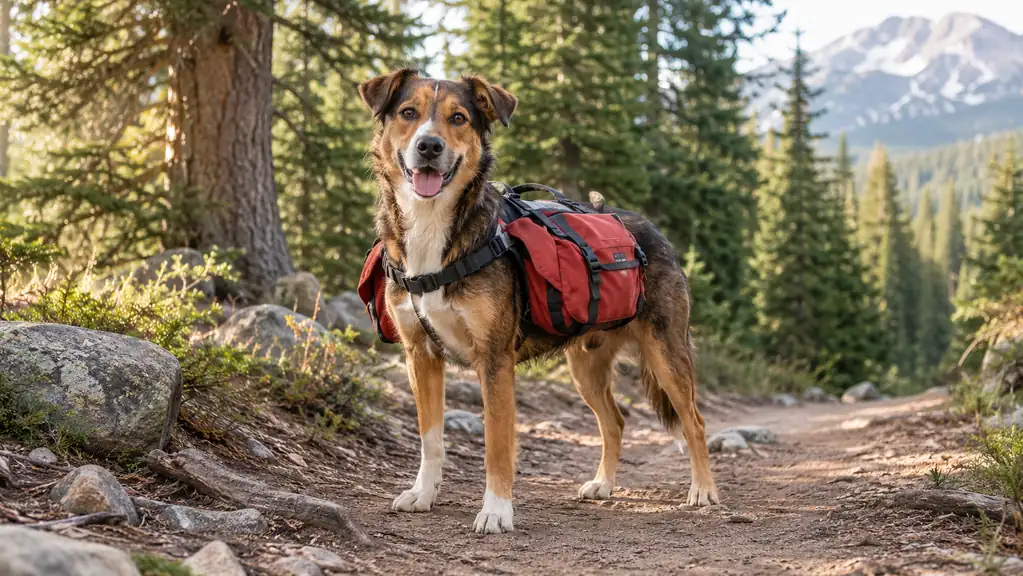
The pack is the Ruffwear Front Range Day Pack, size Medium. It weighs 15.84 ounces empty, so what I notice on a climb is the water, not the pack. It is a saddlebag design with a zippered pocket on each side and three leash attachment points, which turned out to matter more than I expected the first time I clipped the leash to the pack instead of to his harness. What it will not do is load itself sensibly. That part is on you, and it is the part I got wrong first.
Let the dog carry his own water this Saturday
The Front Range Day Pack holds two 20 oz bottles and a clipped-on bowl without asking Moss to work for it. Two years of Cascade Saturdays and it is still the pack that goes in the car.
Amazon Check Today's Price on Amazon →Five Steps to a Load That Rides Right
Step 1: Settle the Distance Before You Touch the Pack
Under about five miles, I leave the pack at home. Moss wears the Ruffwear Front Range Harness on those hikes and I carry one bottle in my own pack. That is not because he cannot handle a pack on a four mile loop. It is because on a short hike he drinks less than I expect, and the pack becomes one more thing to fit, rinse and hang by the door. Gear should earn its place in the car. I worked this out slowly over two seasons. For a while I brought the pack on every hike because I had bought it and felt I ought to use it, and on the short loops it was just a warm extra layer with two empty pockets. On the long days it was the opposite: his two bottles rode on his own sides and my shoulders noticed the difference. So the rule settled itself. Short day, harness. Long day, pack.
Over five miles, and on every overnight, the pack goes on and the harness stays home. On pack days the leash clips to one of the pack's leash attachment points rather than to the harness, and that is the entire swap. I do not wear both. Two layers of straps on a dog in July is a bad idea, and I worked that out on a warm afternoon rather than from anyone telling me so.
So the first decision is not about gear at all. It is the mileage. Look at the map, decide whether this is a five mile day or a nine mile day, and let that pick the setup. Everything after this step depends on it.
Step 2: Fit the Pack Empty, With the Dog Standing Square
Fit it empty, before you put a single bottle in it. I put the pack on Moss in the driveway with nothing inside, on flat ground, and let him stand square rather than sitting or leaning. Then I checked that the two saddlebags sat level with each other and that nothing was twisted. It took a few minutes on a Thursday evening in the spring, with the light going and the car parked behind us. What I did not do was fit it at the trailhead with the dog excited and the leash already on, which I have watched other people attempt and it never looks like fun for anyone involved. Flat ground, quiet driveway, no distractions. I have not had to change the fit since, which is the point of doing it properly once.
Moss is 46 pounds and about 21 inches at the shoulder, and Medium is what he wears from Ruffwear. If your dog sits between sizes on the size chart, the fit check you just did matters more than the chart does. A pack that shifts when the dog trots will rub, and a pack that is too big will slide forward on a downhill, which is exactly when the dog is already working hardest.
The check I use is simple. After the pack is on and settled, I slide a flat hand under the straps at the chest and shoulder. Snug, not tight. Then I watch him walk twenty steps. If the saddlebags swing side to side, it is loose. If he walks sideways or stops, something is wrong and I start over. I also check the fit at the start of each season and once on a wet day, because a slick coat and a dry coat do not sit the same under a strap.
Step 3: Two Bottles, One on Each Side, and Nothing Else Heavy
The load is two 20 oz plastic water bottles from home, one in each zippered side pocket, plus poop bags and a handful of treats. That is it. Moss carries no more than that, ever, and I have never once thought he should carry more. His water is the job. My water, the lunch, the layers and the first aid kit stay in my pack, because I am the one who chose to walk this far. What I tried first and got wrong was treats loose in the pocket, and a single 32 oz bottle split between the two sides because that was the bottle already in the kitchen. The loose treats slid into one corner and swung on the downhills, and the big bottle made the pack sit heavy and low on one side. A small zip bag and two matched 20 oz bottles fixed both problems and cost me nothing.
Balance takes about a minute and it is worth the minute. I put the bottles in one at a time and check by lifting each side pocket with my hand. If one side feels heavier, I move the bag of treats across or split it. The saddlebags are built weight-forward, and an uneven load fights that. It also helps to fill both bottles to the same level rather than one full and one half. Half a bottle of difference is enough to notice when the dog starts trotting.
What does not go in the pack: the bowl, which clips to the outside, and anything heavy or awkward. It is a day pack for a dog, not a rucksack. I keep the load the same on every hike so that nothing surprises me on the one Saturday when I am tired and loading it in a hurry at the trailhead.
He carries 40 ounces and a bowl. I carry everything else, including the lunch, and my shoulders finally noticed the difference.
Step 4: Give the Dog Two Short Outings Before You Trust the Load
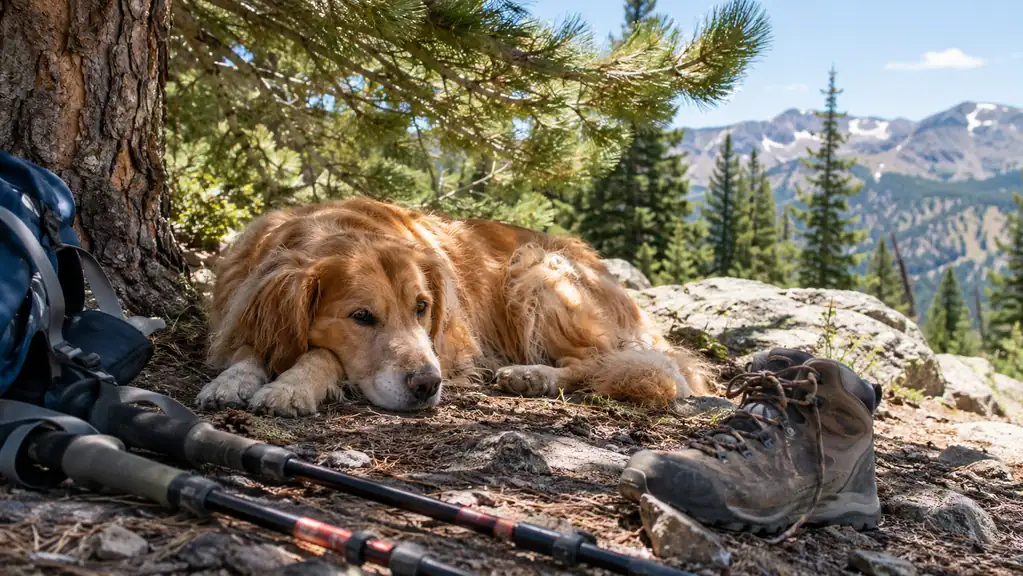
The first two short outings with the pack on, Moss walked a little stiffly. Not hurt, not unhappy, just aware that something was on his back. He high stepped once in the driveway, then stopped doing it. He was over it by the third walk and now he stands still while I load it. That is the whole story. There was no drama, no training program and no treats waved in front of him, just a couple of easy miles on ground he knows. What I watched for was him stopping, lagging behind, or dropping to roll. None of that happened, and I would have taken the pack off and gone home if it had.
The first outing should be short and boring. I did a familiar trail close to the trailhead, about a mile, with the pack empty except for the bowl clipped to the outside. The second time, I added one bottle and went about two miles. By the third walk, the load was normal. Doing this on a new trail with a big day planned is how you end up carrying the pack yourself for four miles while the dog walks beside you looking unbothered.
After each of those first walks, check under the straps and along the chest. I look for rub marks and I check whether the pack has shifted at all. Moss had none, but I would rather look than assume. If something had rubbed, I would have stopped and refitted before going further, and if it rubbed a second time I would have left the pack home for the season. A pack that rubs is not worth the water it carries.
Step 5: Run the Same Water and Snack Routine Every Time
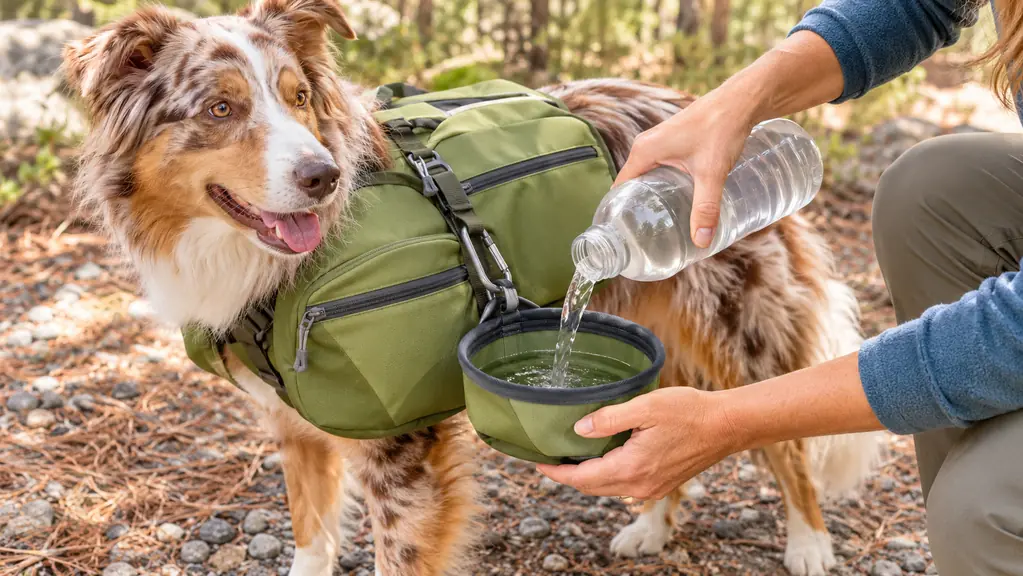
The bowl is a collapsible one, 48 oz, and it lives clipped by its carabiner to the outside of the pack. At each stop I unclip it, unzip it open, and pour about a third of a bottle in. A third is deliberate. It is enough for Moss to drink without leaving half of it to spill when he lifts his head, and it means I waste less of the water I carried up the hill. The bowl is floppy until it is unzipped, so I open it all the way before pouring rather than trying to hold it half open with one hand and a bottle in the other.
I offer water at the top of a climb, at any crossing where we stop anyway, and roughly every forty five minutes on a warm day. On a hot afternoon I shorten that gap to about twenty minutes and I watch whether he is actually drinking or just standing over the bowl. I do not force it. Some stops he drinks the whole third, some stops he takes two laps and walks away, and both are normal. The bowl goes back on the outside of the pack and we keep moving.
Snacks follow the same pattern. A few treats at the same stops, out of the zippered pocket, and his kibble at camp on the one or two overnights we do each summer. The bowl handles both jobs. I like that I am not packing a separate food bowl for a single night out, and I like that the routine is identical every time, so I never have to think about it on the trail.
What Else Helps
A hands free leash changes how water stops work. I hike with trekking poles, so the leash is buckled around my waist and I have both hands free for the bowl and the bottle. At a busy trailhead I take the traffic handle instead, because a parking lot is not the place to be at the end of a bungee. If you are still holding a leash in one hand, the bowl and bottle routine gets clumsy fast, and you will start skipping stops without noticing you are doing it.
The other thing that helps is a rinse at home. Both the bowl and the pack get rinsed and hung by the back door after a hike, and grit out of the zipper is the only maintenance either one asks for. On a hot day I leave the pack in the car entirely and carry Moss's water myself. A pack is one more layer on a dog, and I would rather be the one who is warm. On snowshoe days it stays home too, because a pack and a snow crust together are more trouble than they are worth.
Forty ounces of water, off your shoulders
The Ruffwear Front Range Day Pack in Medium has carried Moss's water for two years of Saturday hikes, and it is the first thing I reach for on anything over five miles.
Amazon Check Today's Price on Amazon →